ZIMBABWE’S LEADERS LOVE PhDs, BUT IS IT FOR THE RIGHT REASONS?
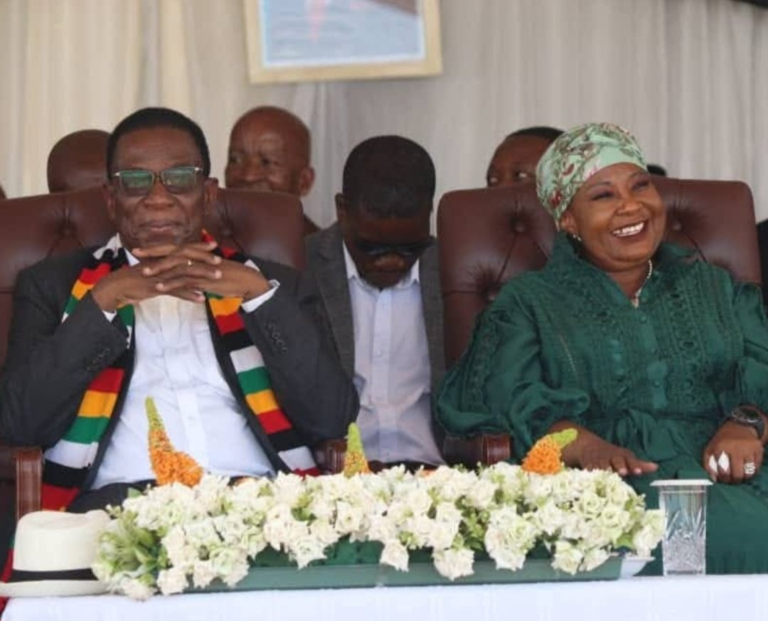
President Emmerson Mnangagwa traveled to Chiweshe, Mashonaland Central, to celebrate an important moment for his wife, First Lady Dr. Auxillia Mnangagwa. She recently earned a Doctor of Philosophy (PhD) degree in Tourism and Hospitality Management from Midlands State University. President Mnangagwa personally handed her the doctoral cap during her graduation in Gweru. This was a proud moment for their family, and many people joined in the celebrations.
But this moment has also made people think about why so many top officials in Zimbabwe are getting PhDs. In recent years, it has become very common for politicians and high-ranking officials to earn doctorate degrees. Some people believe this is a good thing, but others question if these degrees are being earned for the right reasons.
One example that many Zimbabweans remember is former First Lady Grace Mugabe. In 2014, she received a PhD from the University of Zimbabwe, but the degree was controversial. Many people did not understand how she managed to get it so fast. Some even called it fake. The issue became a big topic, especially after her husband, the late President Robert Mugabe, was removed from power in a coup in 2017.
Vice President Constantino Chiwenga also has a PhD from the University of KwaZulu-Natal. But just like Grace Mugabe’s degree, there has been a lot of debate about how he got it. Many Zimbabweans feel that some officials are getting these degrees not because they love learning, but because they want more status and power.
In Zimbabwe, having a PhD is seen as a way to gain respect and influence. Many officials believe that when they have a PhD, people will see them as smarter, stronger leaders, and more capable of making big decisions. It is not just about learning—it is also about looking important.
This is called “academic credentialism.” It happens when people use degrees not to show knowledge, but to make themselves look better. It is becoming more common in Zimbabwe, and many citizens are asking important questions. Are these officials getting degrees so they can serve the people better, or are they doing it for their own benefit?
Education is always a good thing. Learning helps people grow and improve their communities. When leaders go to school and gain more knowledge, it should help them lead better. It should mean they will use their education to solve problems, create jobs, and improve people’s lives.
But if leaders are getting degrees only for personal fame, then education loses its true meaning. When a PhD becomes just a title for power, it does not help the country. It only helps the person who receives it.
The First Lady’s new PhD could inspire many Zimbabweans to seek education. But at the same time, people are asking why so many top officials are suddenly interested in getting PhDs. Are they doing it to truly improve their skills, or is it just for public image?
History has shown that in Zimbabwe, many officials use education as a way to stay in power. They believe that when they have a PhD, people will respect them more. They think it makes them untouchable. But leadership should not come from degrees. True leadership comes from serving the people with honesty and integrity.
If Zimbabwe’s leaders want to be good role models, they must show that education is about learning and growth. A PhD should not just be a decoration. It should be used to make real changes and improve people’s lives. Leaders should use their knowledge to build a better country, not just to add titles to their names.
Dr. Auxillia Mnangagwa’s PhD is a big moment for her and her family. But it also brings up an important conversation: Why are so many Zimbabwean leaders chasing PhDs? Education is a powerful tool, but it should never be used only for personal gain. It should be used to bring real progress and development.
The people of Zimbabwe want their leaders to focus on what truly matters. They want them to use their knowledge to solve real problems. Education should not be a shortcut to power. It should be a path to making Zimbabwe a better place for everyone.


You seem to overstate the notion that every advanced degree obtained by Zimbabwean leaders is merely a ploy for personal gain. By suggesting that academic credentials are just a façade for power and status, you risk dismissing the genuine academic effort and learning that might be taking place. It would be helpful if you explored the possibility that some of these leaders may truly value education as a tool for better governance, rather than assuming every PhD is bought solely for image.
You provide an insightful discussion on the role of education in leadership, particularly in how a PhD can be both a symbol of achievement and a potential tool for consolidating power. Your exploration of academic credentialism is balanced and encourages readers to reflect on the true purpose of higher education in public service. It’s refreshing to see you challenge both the positive and negative aspects of this trend, ultimately urging leaders to use their knowledge for real, transformative change in Zimbabwe.
You do a commendable job of sparking a necessary conversation about academic credentialism among Zimbabwean leaders. By examining why so many officials are chasing PhDs, you invite readers to think critically about whether these degrees are enhancing leadership or merely serving as a status symbol. Your analysis is thought-provoking and encourages a deeper look into how education should ideally contribute to public service and national development.
Your article offers a clear and detailed examination of the rise in PhDs among top officials, effectively connecting individual achievements to wider issues of accountability and genuine service. By questioning if these academic pursuits are truly about personal growth or simply a bid for enhanced prestige, you stimulate an important debate.