BUSINESSMAN AND PRESIDENT: A FRIENDSHIP WITH MANY QUESTIONS
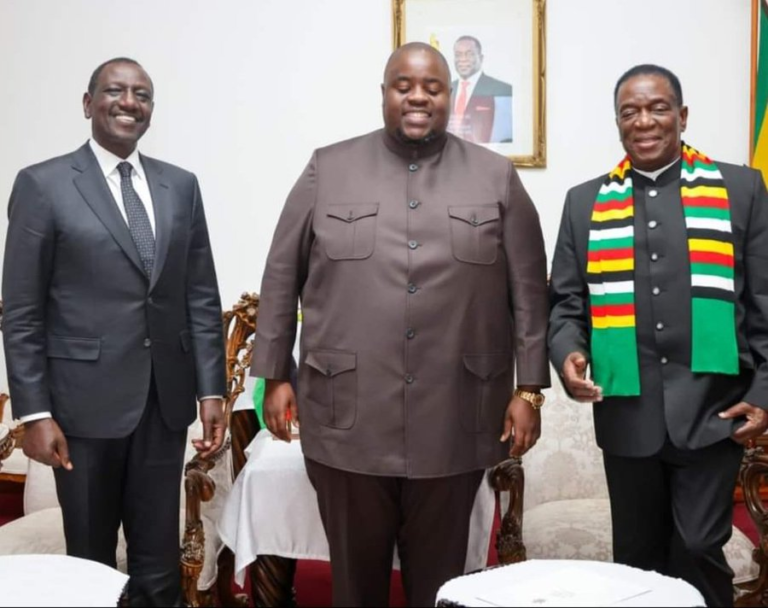
Zimbabwe’s President Emmerson Mnangagwa and businessman Wicknell Chivayo were seen together with Kenyan President William Ruto yesterday. Ruto is in Zimbabwe to open the Zimbabwe International Trade Fair in Bulawayo today. This is an important event for Zimbabwe, but it has also made people talk about something else—Chivayo’s close friendship with the President.
Wicknell Chivayo is a businessman who is always in the news for different reasons. He supports President Mnangagwa a lot. His company, Intratek, has received big government contracts. One of the biggest is a US$200 million deal to build solar power projects. Many people believe he gets these deals because of his strong connection to the President. Some are asking if the process is fair and honest.
Chivayo has made a lot of money, and he likes to show it. He has been giving out cars to Zanu PF supporters and some famous people. Some people say this is just like throwing confetti at a wedding—flashy but with little meaning. Others believe it is part of something bigger, a way to gain more power and influence.
People are asking a lot of questions. Is Chivayo doing all this because he truly supports Mnangagwa, or is it a smart business move? Is he getting government contracts because of his skills or because of his close friendship with the President? Many are worried that politics and business are mixing in a way that is not good for Zimbabwe.
This kind of problem is not new in Zimbabwe. People have often worried about corruption in government. They want leaders to make fair decisions that help everyone, not just their friends. If politicians give contracts to their friends instead of the best companies, it hurts the economy and makes people lose trust in the government.
This issue is not just a Zimbabwean problem. Many African countries face the same challenge. When business and politics mix too much, it creates unfair systems. People want leaders to make decisions that help the country, not just a few individuals.
Another big issue is how Zimbabwe looks to other countries. When international leaders like President Ruto visit, they see who is close to the government. If those people are controversial, it can affect Zimbabwe’s reputation. Other countries and investors might hesitate to do business with Zimbabwe if they think corruption is a big problem.
Zimbabwe’s future depends on good leadership and honest business. Many people want a system where businesses grow because they work hard and deliver good services—not because they have friends in high places. If business leaders and politicians continue to mix in this way, the country might struggle to attract honest investors.
Chivayo’s presence at big political events is a sign that the government and business world are very connected. Some people see it as a problem, while others think it is just how things work. But as Zimbabwe moves forward, it must make sure that business deals are done in a fair and open way. The country needs to encourage investment, but it must also ensure that deals are made based on merit, not personal connections.
People in Zimbabwe and around the world are watching closely. They want to see if the government will make business fair for everyone, not just a few. In the end, Zimbabwe’s success depends on honesty, fairness, and good leadership.


Despite the concerns about cronyism, such high-level interactions demonstrate that Zimbabwe is a significant player in the region. With the right safeguards in place, the relationships between politicians and business leaders could pave the way for innovative public-private partnerships that benefit the entire country.
It’s encouraging to see Zimbabwe engaging with influential international leaders like President Ruto. The presence of high-profile figures at the Trade Fair could signal a new era of regional cooperation and economic growth, even if some of the relationships raise concerns. While the close ties between Chivayo and Mnangagwa are controversial, they also suggest a strong network that could potentially streamline decision-making in key sectors. If these partnerships are managed transparently, they might drive much-needed investment and development.
It’s alarming to see political favoritism so openly at play. Chivayo’s connection with the President, which appears to secure lucrative deals for his company, isn’t about genuine support for national development—it’s about personal gain and maintaining power through underhanded means.